You Won’t Believe What I Found in Cappadocia’s Hidden Leisure Spots
Imagine floating above fairy chimneys at sunrise, then unwinding in a cave hammam like emperors once did. Cappadocia isn’t just hot air balloons and photo ops—it’s a playground of ancient rhythms and quiet joys. I wandered its valleys and villages not as a tourist, but as someone truly *living* the moment. From underground wine tastings to serene tea houses carved into rock, this is a place where leisure feels sacred. Let me show you the real pulse of rest here.
The Magic of Slowing Down in a Surreal Landscape
Cappadocia’s terrain reads like a dream painted by nature and time. Towering rock spires, known as fairy chimneys, rise like silent sentinels across a landscape sculpted by volcanic eruptions millions of years ago. The soft tuff stone, formed from ash and lava, eroded into whimsical shapes—some resembling mushrooms, others stretching into cathedral-like pillars. These formations, shaped by wind and water, create a surreal environment that feels both ancient and alive. Walking through this otherworldly scenery, one begins to sense a subtle shift—not just in the air, but in the soul.
What makes Cappadocia so conducive to leisure is not just its beauty, but its silence. Unlike bustling city centers or crowded beaches, this region hums with a stillness that invites introspection. The valleys—Red Valley, Rose Valley, Love Valley—are not just hiking trails; they are natural sanctuaries where the rhythm of footsteps slows and breath deepens. There are no loudspeakers, no traffic, only the occasional chirp of a bird or rustle of a lizard darting across sun-warmed stone. In this quiet, the mind begins to unclench, releasing the tension carried from daily life.
For many visitors, the instinct is to document every moment, to capture the perfect photo at sunrise. But the true magic unfolds when one sets the camera aside and simply *is*. The shift from sightseeing to experiencing happens quietly—perhaps while sitting on a low stone wall, watching light dance across the cliffs, or pausing mid-step to feel a cool breeze rise from a hidden crevice. This is where leisure becomes more than relaxation; it becomes a form of presence. The land itself seems to teach a lesson: that rest is not passive, but an active engagement with stillness.
Travelers who allow themselves to slow down often discover that Cappadocia’s greatest gift is its ability to recalibrate the internal clock. The hurried pace of modern life—emails, deadlines, endless to-do lists—fades into the background. In its place grows a deeper awareness of the present. This is not escapism, but reconnection. The soft curves of the rock, the gentle gradient of the trails, the way shadows lengthen across the valley floor—all of it encourages a meditative state. It’s no wonder that early Christian monks chose this region for solitude and prayer. The landscape doesn’t demand attention; it invites contemplation.
Hot Air Balloons Are Just the Beginning: Beyond the Instagram Moment
There is no denying the allure of a hot air balloon ride at dawn. As hundreds of colorful orbs lift into the sky above Göreme, the sight is nothing short of magical. The experience of floating above the fairy chimneys, with the first golden rays touching the stone, is often described as life-changing—and rightly so. Yet, for all its visual splendor, the balloon ride is only the beginning of a deeper journey. The real transformation occurs not in the air, but after landing, when the adrenaline fades and a quieter awareness takes root.
On my own flight, I remember the silence that followed the final burst of the burner. As the basket touched down in a remote field near Uçhisar, the pilot handed me a small glass of sparkling wine. We stood together, a small group of strangers now bonded by shared awe, sipping in silence as the sun climbed higher. A local farmer approached with a tray of tea, offering warm apple-infused cups with a smile. In that moment, I realized the balloon ride wasn’t just about the view—it was about connection. Connection to the sky, to the earth, and to the people who call this place home.
Many tourists leave after the flight, believing they’ve experienced the essence of Cappadocia. But the true depth of the region reveals itself slowly. The fleeting thrill of floating gives way to more enduring pleasures: the warmth of a stone bench in the afternoon sun, the sound of wind through a narrow canyon, the taste of freshly baked gözleme from a roadside vendor. These are not photo opportunities, but lived moments. They don’t demand to be shared online—they simply exist, waiting to be noticed.
The lesson here is subtle but powerful: joy often lies not in the peak experience, but in what follows. When we allow ourselves to linger beyond the highlight, we open the door to serendipity. A chance conversation with a local artist, an unplanned detour down a dirt path, a moment of stillness on a quiet ridge—these are the memories that stay. Cappadocia teaches us that true leisure is not about checking boxes, but about releasing the need to measure experience at all.
Cave Cafés and Valley Tea Houses: Where Locals Pause
Scattered throughout Cappadocia’s valleys are small, unassuming retreats where time seems to pause. These are not grand resorts or polished cafés, but humble tea houses and cave-side lounges tucked into the rock face or nestled among apricot orchards. Often run by families for generations, they serve as quiet gathering spots for villagers and thoughtful travelers alike. Here, leisure is not scheduled—it is lived. A man reads a newspaper under a grapevine canopy. A grandmother sips tea while watching her grandchildren play nearby. A traveler sketches in a notebook, shaded from the midday sun.
One of the most memorable spots I discovered was a small tea house in Pigeon Valley, accessible only by a narrow footpath. The owner, a retired schoolteacher named Fatma, brews apple tea in a copper kettle and serves it in hand-painted glasses. Her terrace, carved directly into the cliff, overlooks a sweeping view of rock formations bathed in soft afternoon light. There are no menus, no Wi-Fi signs, no loud music—just the sound of wind and the occasional coo of a pigeon from the nesting holes above. Sitting there, wrapped in a wool blanket as the air cooled, I felt a rare sense of peace.
These spaces thrive on simplicity. The tea is sweet and warm, often infused with cinnamon or dried fruit. The snacks are homemade—cheese-filled pastries, honey-drenched baklava, or fresh figs from the garden. Seating is rustic: wooden benches, low tables, or cushioned nooks carved into the cave walls. Lighting is soft, often provided by lanterns or small oil lamps that flicker gently in the evening. There is no pressure to order more or to leave quickly. In fact, staying for hours is not just allowed—it is expected.
What makes these places special is their authenticity. They are not designed for Instagram. They do not cater to mass tourism. Instead, they reflect a way of life that values pause, presence, and human connection. For the local community, these spots are essential—places to rest after farming, to meet neighbors, to escape the summer heat. For visitors, they offer a rare opportunity to step into that rhythm, even if just for an afternoon. To sit in one of these tea houses is to participate in a centuries-old tradition of slow living, where the simple act of drinking tea becomes a ritual of care.
Underground Relaxation: Hammams and Subterranean Wine Cellars
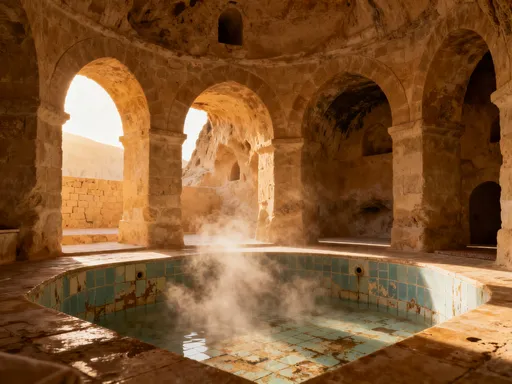
Beneath the surface of Cappadocia lies another world—one of cool stone chambers, echoing footsteps, and the gentle rise of steam. The region’s ancient cave systems, once used as homes, churches, and even underground cities, now serve a new purpose: spaces for deep relaxation. Among the most profound experiences I had was visiting a traditional hammam carved entirely from tuff stone. Unlike modern spas, this was not a luxury destination, but a working bathhouse where locals still come to cleanse and unwind.
The ritual begins in a warm antechamber, where visitors rest on a heated marble slab called a *göbek taşı*. As the body warms, layers of tension begin to melt. Then, in the main chamber, steam rises from floor vents, carrying the faint scent of lavender and mineral-rich water. Attendants, trained in the old methods, perform gentle exfoliation and foam massages, their movements rhythmic and soothing. The sound of water dripping from the domed ceiling creates a meditative backdrop. Time loses meaning. There is only heat, breath, and release.
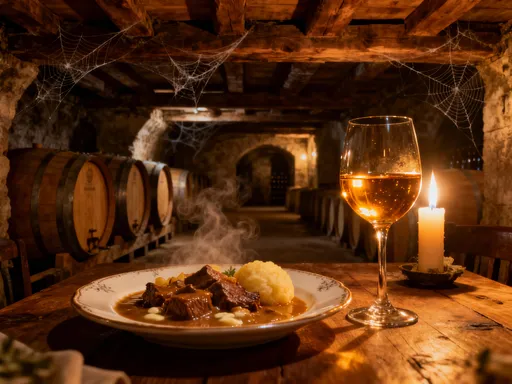
Equally captivating are the region’s repurposed wine cellars. Cappadocia has a winemaking tradition that dates back over 3,000 years, and many of its ancient storage caves are now used for tastings and quiet gatherings. I visited one such cellar near Avanos, where a family produces small-batch reds from indigenous grapes like Öküzgözü and Boğazkere. The temperature remained a constant 14°C year-round, a natural advantage of the underground environment. As we sat on stone benches, sipping wine aged in oak barrels, the owner shared stories of harvest seasons and ancestral recipes. The dim light, the cool air, the taste of earth and fruit—it was leisure elevated to an art form.
What both hammams and wine cellars share is a sense of sanctuary. Being underground offers more than physical comfort; it provides emotional shelter. Above, the sun beats down, tourists move quickly, and schedules press forward. Below, there is stillness. The weight of the earth above feels protective, almost womb-like. In these spaces, one is invited not to do, but to *be*. This is not indulgence—it is restoration. And in a world that rarely allows us to stop, such spaces are not just rare; they are necessary.
Walking the Valleys: Hiking as a Form of Rest, Not Exercise
In most places, hiking is framed as a physical challenge—a test of endurance, a way to burn calories, a means to reach a summit. In Cappadocia, the trail is not a path to conquer, but a journey to savor. The region’s network of valleys offers gentle, well-marked routes that wind through rock formations, orchards, and abandoned cave homes. Rose Valley, with its pink-hued cliffs, and Love Valley, known for its phallic-shaped spires (a natural formation, not a cultural statement), are popular choices. But the true pleasure lies not in completing the trail, but in the pauses along the way.
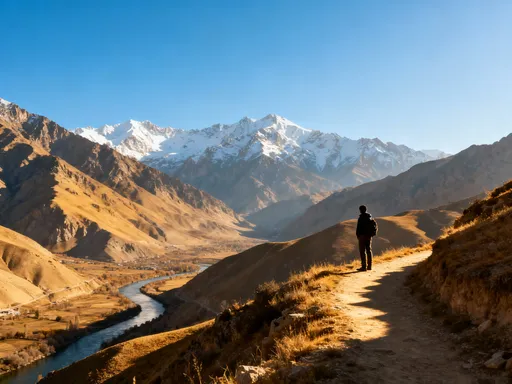
I learned this on a morning walk through Meskendir Valley, a less-traveled path that begins near a small chapel carved into the rock. The trail was soft underfoot, a mix of fine gravel and packed earth. Sunlight filtered through apricot trees, casting dappled shadows on the ground. Every few minutes, I would stop—not because I was tired, but because something caught my eye: a wildflower growing from a crack in the stone, a bee hovering over thyme, a vantage point where the entire valley unfolded below. These moments of stillness were not interruptions; they were the point.
Walking here becomes a form of moving meditation. The pace is slow, the incline gentle. There are no steep climbs or technical obstacles. Instead, the path invites mindfulness. You notice the texture of the rock, the way light changes with the hour, the sound of your own breath. Benches appear at intervals, placed not for convenience, but for contemplation. Sitting on one, watching a lizard dart across warm stone, I felt a deep sense of calm—not forced, not achieved through effort, but given freely by the land itself.
For those planning to walk, a few practical tips enhance the experience. Start early, when the air is cool and the light is soft. Bring water, a hat, and a light jacket—temperatures can shift quickly. Wear comfortable shoes with good grip, as some sections are uneven. Most importantly, leave the checklist behind. There is no need to see every viewpoint or complete every trail. Instead, choose one valley and allow yourself to wander without urgency. Visit in spring or autumn for milder weather and fewer crowds. And if you find a quiet spot to sit and simply breathe, stay there as long as you like. In Cappadocia, the trail is not the destination—the pause is.
Staying in a Cave Hotel: Leisure Built into Your Room
One of the most transformative aspects of a Cappadocian journey is where you rest at night. Cave hotels, carved directly into the rock, are not novelty accommodations—they are immersive experiences that deepen the connection to place. Unlike conventional rooms, these spaces are shaped by nature. Thick stone walls regulate temperature, keeping interiors cool in summer and warm in winter. Natural acoustics muffle outside noise, creating a quiet sanctuary. Lighting is often soft, with lanterns or recessed bulbs that highlight the texture of the stone.
I stayed in a small family-run hotel in Çavuşin, where each room was uniquely shaped by the contours of the rock. My suite had a low arched ceiling, a hand-carved wooden bed, and a private terrace overlooking a quiet valley. In the evening, I lit the small fireplace and sat wrapped in a blanket, watching the stars emerge. The absence of sharp corners, the organic flow of the space, the way sound moved through the chamber—it all contributed to a profound sense of peace. This was not just a place to sleep; it was a place to recharge.
Many cave hotels enhance the experience with thoughtful details. Rooftop terraces offer panoramic views for sunrise and sunset. Some include indoor gardens or small courtyards with fountains. Others provide in-room amenities like heated floors, deep soaking tubs, or private hammams. But luxury here is not about opulence—it is about harmony. The best accommodations do not impose on the landscape; they emerge from it. They prioritize atmosphere over extravagance, comfort over showiness.
When choosing a place to stay, consider more than just amenities. Look for hotels that reflect the local rhythm—places where breakfast is served slowly, where staff greet you by name, where silence is respected. A cave hotel should feel like a retreat, not a resort. It should invite you to slow down the moment you step inside. By aligning your lodging with the spirit of the land, you extend the practice of leisure from day into night, making rest not an interruption, but a continuous thread.
How to Travel Cappadocia Like You Live There
The most meaningful way to experience Cappadocia is not as a visitor, but as a temporary resident. This begins with adopting the local rhythm—a pace that honors rest, connection, and simplicity. Start your day slowly. Have breakfast outdoors, savoring fresh bread, honey, and goat cheese. Allow time for tea in the afternoon, not as a quick break, but as a ritual. Embrace the idea of the *siesta*, even if only for thirty minutes, letting the midday heat inspire stillness rather than activity.
Meals are not rushed here. Locals gather for long lunches, sharing dishes family-style, talking for hours. Follow their lead. Choose a village restaurant with a garden, order a few meze, and let the meal unfold. Ask the owner for recommendations. Accept a glass of homemade rakı if offered. These moments of connection are often the most memorable. Avoid the temptation to pack every day with activities. Instead, build in empty space—time to read, to sketch, to sit and watch the light change on the cliffs.
Engage with the community when possible. Visit the weekly market in Nevşehir or Gülşehir. Buy fresh produce, chat with vendors, taste samples of dried fruit or cheese. Take a short class in traditional pottery, a craft that has thrived in Avanos for centuries due to the region’s red clay. These experiences are not about mastery, but about participation. They ground you in the present and deepen your appreciation for local life.
The truth is, the most beautiful moments in Cappadocia are rarely planned. They happen when you’re not looking: a sudden rainbow over the valley after a brief shower, an old man playing a flute on a bench, a cat napping in a sunlit doorway. These are the gifts of slowness. They require only that you be present to receive them. To travel like a local is to trust that rest is not wasted time, but the foundation of a meaningful journey.
Conclusion
Cappadocia’s true beauty lies not in its postcard views, but in the quiet spaces between them. The real magic happens when you trade schedules for stillness, and snapshots for presence. By choosing leisure as a mindset—not just an activity—you unlock a deeper connection with this land of stone and sky. Let go. Breathe. This is what slow travel feels like when it’s done right.